
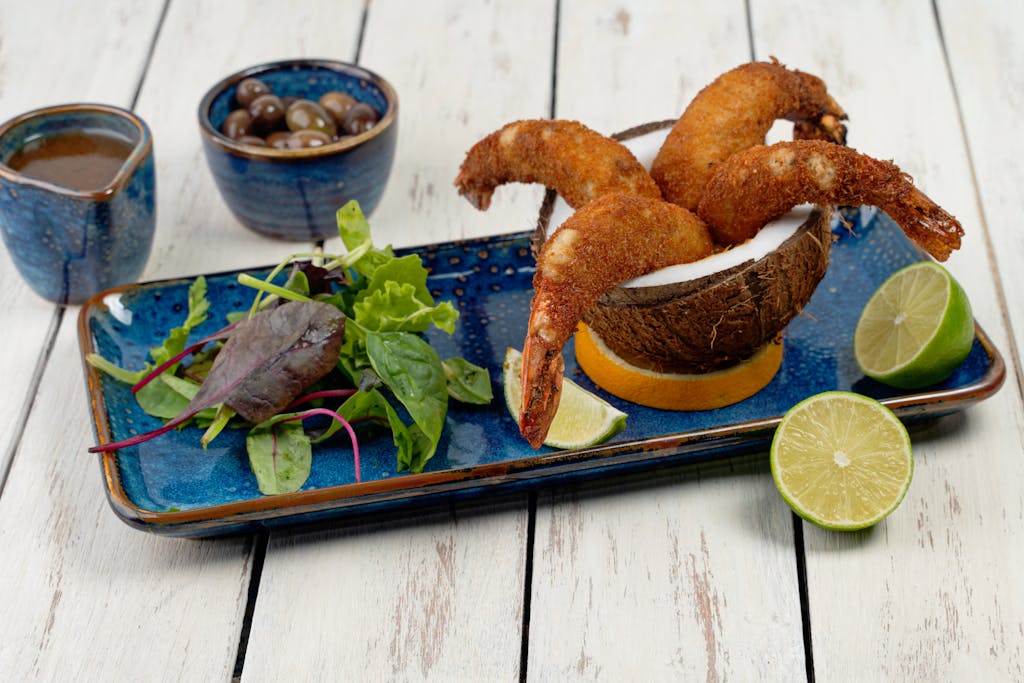
Coconut shrimp is a popular tropical appetiser featuring crispy, golden shrimp coated in sweet coconut. Loved worldwide, it’s easy to make at home, visually appealing, and perfect for both beginners and experienced cooks. This guide covers its origins, preparation, variations, and tips for restaurant-quality results.
Understanding Coconut Shrimp
Coconut shrimp is a crispy, sweet, and savoury seafood dish made by coating shrimp in shredded coconut and frying or baking it to golden perfection. It delivers a rich tropical flavour with a satisfying crunch.
Order Online
What Exactly Is Coconut Shrimp?
Coconut shrimp is made by coating shrimp in flour, dipping them in egg, and finishing with a layer of shredded coconut and breadcrumbs. This coating becomes crisp and golden during cooking, while the shrimp inside stays juicy and tender. Moreover, the contrast between the crunchy exterior and the soft seafood interior creates a satisfying bite. Coconut shrimp complements tropical and Asian cuisines perfectly. However, it has also become a mainstream favourite in American restaurants. Consequently, its universal appeal continues to grow.
Origins of Coconut Shrimp
It originated in Southeast Asia, where coconuts and fresh shrimp are abundant. The tropical ingredients made the pairing natural. Over time, the dish spread to the West, gaining popularity for its exotic flavour, easy preparation, and widely available ingredients, and became a global favourite.
Ingredients for Perfect Coconut Shrimp
The best it uses large fresh shrimp, a blend of shredded coconut and breadcrumbs, and simple seasonings that enhance its natural flavour. These ingredients create a crispy, flavorful coating that cooks beautifully.
Core Ingredients You Need
It uses simple, essential ingredients: large shrimp for texture, flour and eggs to hold the coating, shredded coconut for sweetness, and breadcrumbs for crunch. Seasonings enhance flavour, while oil is used for frying. Dipping sauces, such as sweet chilli or mango, complement the dish. High-quality ingredients ensure crispier, tastier shrimp.
Preparing the Shrimp
Preparing the shrimp involves cleaning, deveining, and patting them dry so the coating sticks well. This simple step ensures even cooking and a perfectly crisp texture.
Cleaning and Seasoning
Proper preparation is key to great coconut shrimp. Clean, devein, and dry the shrimp thoroughly so the coating adheres well, keeping the tails on for better presentation. Lightly season with salt, pepper, and a touch of garlic powder to enhance flavour and set the foundation for perfect breading.
Setting Up a Breading Station
A well-organised breading station improves efficiency and ensures consistent results. Begin by placing seasoned flour in one shallow dish. Combine shredded coconut and breadcrumbs in a third dish. This setup allows you to move quickly from one step to the next. Moreover, the structure prevents clumping and keeps the process clean. Consequently, your it will have an even, crispy layer every time.
Mastering the Coating Process
The coating process involves dipping the shrimp in flour, egg wash, and a coconut–breadcrumb mixture to achieve a crisp, golden crust. Each layer helps lock in flavour and ensures the shrimp fries evenly.
Step-by-Step Coating
The coating process significantly influences the final texture of your it. First, dredge each shrimp in the seasoned flour, shaking off excess flour. After that, press each shrimp into the coconut and breadcrumb mixture, ensuring it is completely covered. The coconut should cling to all sides to create a uniform crust. Moreover, pressing gently improves adhesion and prevents the coating from falling off during cooking. This method produces a consistent, golden crust that enhances both flavour and presentation.
Double-Coating for Extra Crunch
If you prefer a thicker and crunchier crust, you can double-coat your shrimp. This technique involves dipping the shrimp back into the egg mixture after the initial coconut coating, then pressing it into the coconut mixture again. Double-coating creates an extra-crispy texture that many restaurants use to elevate their coconut shrimp. Moreover, it adds a protective layer that prevents the shrimp from overcooking. Ultimately, the double-coating technique results in shrimp that are both crunchy on the outside and tender on the inside.
Cooking Coconut Shrimp
It can be fried for maximum crispiness or baked for a healthier option, with both methods producing golden, tender, and flavorful shrimp. Proper cooking ensures the coating stays crunchy while the shrimp remains juicy.
Frying for Maximum Crispiness
Frying is the preferred method for coconut shrimp because it creates the crispiest texture. Heat oil to 350°F, fry the shrimp for 2 to 3 minutes until golden, and avoid overcrowding to maintain the oil temperature. Drain on paper towels to keep them light and crunchy, a key reason chefs favour frying.
Baking for a Healthier Option
Baking offers a lighter alternative to coconut shrimp. Cook them at 400°F for 12–15 minutes, flipping halfway and lightly spraying with oil for crispness. Although slightly softer than fried shrimp, baked it remain flavorful and lower in fat, making this method ideal for health-conscious cooks.
Expert Tips for Restaurant-Level Results
Using fresh ingredients, maintaining a consistent oil temperature, and handling shrimp carefully ensures crispy, evenly cooked coconut shrimp that look and taste professional.
Choose High-Quality Ingredients
Fresh shrimp yield the most flavorful, tender results. High-quality coconut and breadcrumbs also improve texture. Moreover, using fresh seasonings rather than old, stale spices enhances the overall dish. Consequently, ingredient quality directly affects the success of your coconut shrimp.
Maintain Consistent Oil Temperature
Consistent oil temperature is crucial when frying. Oil that is too hot burns the coating before the Coconut Shrimp cooks, while oil that is too cool produces greasy, soggy results. Using a thermometer ensures precision. Additionally, adding shrimp in small batches helps maintain a stable temperature. These steps guarantee an evenly fried, golden exterior.
Avoid Overhandling the Coconut Shrimp
Excessive flipping or stirring disrupts the coating. Allowing the shrimp to cook undisturbed helps the crust appropriately set. Moreover, minimal movement reduces the chances of the coating breaking apart. As a result, the shrimp maintain their crisp texture and attractive appearance.
Serving Coconut Shrimp
Serve coconut shrimp immediately while warm, paired with vibrant garnishes and complementary dipping sauces to enhance flavour and presentation.
Presentation Strategies
Serving it immediately enhances both taste and texture. Arrange the shrimp neatly on a platter to create visual appeal. Fresh herbs and lime wedges add vibrant colour and brightness. Additionally, serving the shrimp over a light bed of greens enhances the tropical theme. Small touches such as these elevate the dining experience and make your dish look restaurant-ready.
Choosing the Best Dipping Sauces
It pairs well with sweet, tangy, and spicy sauces. Sweet chilli is the most popular, while mango, pineapple, sriracha mayo, and even honey mustard add unique twists. Offering multiple sauces elevates the dish and lets guests enjoy their preferred flavour.
Creative Variations of Coconut Shrimp
You can enhance coconut shrimp by adding spices, citrus zest, or crushed nuts to the coating, creating unique flavours and textures that personalise the dish.
Flavor Enhancements
Adding spices to the coconut and breadcrumb mixture creates exciting variations. Cayenne pepper introduces heat, while curry powder adds a warm, aromatic profile. Lime zest brightens the flavour and enhances the tropical feel. Smoked paprika brings depth and colour. Each seasoning uniquely changes the dish’s character. Moreover, adjusting the spices lets you personalise your it to suit your taste.
Gourmet Adaptations
Some cooks elevate coconut shrimp by incorporating crushed nuts into the coating. Macadamia nuts provide buttery richness, while almonds offer a subtle, earthy crunch. Blending nuts with shredded coconut creates a luxurious crust that feels upscale and indulgent. Additionally, pairing gourmet it with homemade sauces makes the dish even more impressive. Consequently, minor enhancements can transform a simple appetiser into a fine-dining experience.
Nutritional Value and Health Considerations
It provides lean protein and omega-3s from shrimp, but frying and coconut add calories and fat, so moderation or baking can make it a healthier choice.
Benefits of Shrimp
Furthermore, shrimp contains valuable minerals such as selenium and iodine. These nutrients contribute to healthy metabolism and immune function. Consequently, shrimp forms a nutritious base for this dish.
Impact of Coconut and Cooking Methods
Coconut adds healthy nutrients but also contains saturated fat. Therefore, portion control is essential when enjoying coconut shrimp. Frying increases calorie content, while baking reduces fat. Additionally, air frying offers another balanced alternative that maintains crisp texture. Ultimately, choosing the proper cooking method helps you enjoy it more often without compromising health goals.
Conclusion: Master Coconut Shrimp with Confidence
You now know the origins, key ingredients, and step-by-step techniques to prepare it successfully. Additionally, cooking methods, creative variations, and expert tips ensure restaurant-quality results at home. With proper preparation, your shrimp will turn out golden, crispy, and delicious every time. Gather your ingredients, set up your breading station, and enjoy this tropical favourite in your kitchen.